Príspevky

Lúštenie RSA pomocou "kvantového" počítania ála Čína? Nie je problém...

Kedysi dávno , ešte v r. 2001 som použil veľmi starú, ale elegantnú metódu na riešenie faktorizácie modulu RSA...Fermatova faktorizácia Úloha bola rozlúštiť správu zašifrovanú pomocou RSA - ktorá bola ale kódovaná ala známa "kódová kniha", tj. veľmi ľahko lúštiteľná pomocou ceruzky a papiera - Kľúč na šifrovanie bol veľmi jednoduchý: (modul, e) = (2479, 101): "...Kedze modul je maly, da sa pouzit metoda faktorizacie.  Z faktorizacnych metod som si ako najjednoduchsiu a najrychlejsiu pre moje ucely zvolil klasicku Fermatovu metodu:  Najprv som si vypocital hornu celociselnu hranicu z hodnoty odmocniny z modulu n=2479, t.j. h=[2479^(1/2)]=50.  V prvom kroku som postupoval podla Fermatovej procedury, ktora je udana nasledovnou podmienkou (symbolika je ako obvykle, druha odmocnina je SQRT a mocnina je ozn. "strieskou" , t.j. '^'.): SQRT(h^2-n) by malo byt cele cislo. Ak nie je, hodnota h sa inkrementuje, t.j. h=h+1 a vypocet vyrazu opakujeme dotial, pokial ...

Crypto chip / The Codestar module add-on board

Obraz
The CodeStar module was designed for encryption and decryption of information for personal computers. The board was inserted into a free computer slot and occupied one 8-bit bus slot of a PC, XT, AT class computer. The module was supplied with a floppy disk with files in the Turbo C++ language under the MS-DOS OS . The original CRY 8 customer circuit, based on reliable technology had the entire information encryption and decryption algorithm hidden. This algorithm ( Feistel -type algorithm) was developed and manufactured in Switzerland for reliability on a special order basis, together with a semi-custom integrated circuit using CMOS VLSI technology. The order was placed by the Institute of Computer Systems of the Slovak Academy of Sciences (today‘s Institute of Informatics SAV ). The module was used to encrypt and decrypt the user's information or the user's entire file with an original and constantly changing key, it served to protect the user's data from unauthor...

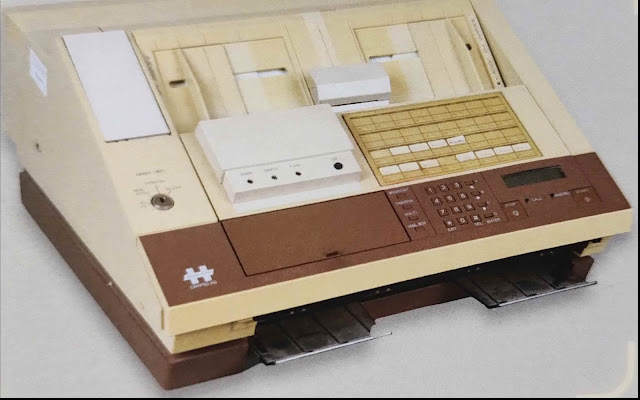
Slovak cryptodevice - a fax with encoder - model HC-4400-09

Obraz
 A fax with an encoder , model HC-4400-09 from the Swiss Company Crypto AG , was placed at Ministry of Foreign Affairs of the Slovak Republic (SR) and abroad at the representative offices of the Slovak Republic. It was used to encrypt and transfer copies of documents using the regular telephone network. The electronic device was compatible with any fax machine or personal computer. It was in the service as a fax server, did not have any restrictions on standard devices, with an error correction mode, automatic protocol adaptation, a security module resistant to unauthorised manipulation, automatic or manual key selection, for protection against forgery, for generating and encrypting keys, a program for managing keys, protected database, speed from 2400 to 14400 b/s. Installation and  operation of the fax machine was simple. Cryptodevice - a fax with encoder - model HC-4400-09  The device was manufactured in the 1990s by the Swiss company Crypto AG , which specialised in...

Spanish Embassy's cipher machine break by Czechoslovakian Secret Service and KGB

Obraz
How the Czechoslovak secret service ŠtB breaks the encryption machine Gretag TC 803 at the Spanish embassy in Prague: https://www.info.cz/zpravodajstvi/cesko/akce-sumperk?odemknout=YAYLEWR8KH Detailed description of the encryption machine  Gretag TC 803 : https://www.cryptomuseum.com/crypto/gretag/803/index.htm Picture of the cipher machine's daily key block   "...Another break-in at the embassy took place on June 27, 1980. In this case, the State Security encountered a problem that it could not deal with. The Spanish started using the Gretag TC 803 encryption machine. ... Daily slips of paper with an encryption key were inserted into it. These were stored in a safe and bound with bookbinding cloth on three sides and in the middle. The canvas thus formed a kind of letter E with four arms. Between the canvas arms were perforated slips of metal foil that were inserted into the encryption machine. One part was designated for each day. Used and unused keys were shredded the...

Military Ciphers according to cpt. Frybort

Obraz
Article about military ciphers by cpt. Bedřich Frýbort, in "Vojenský svět", 1937, 11 and 12, vol. V. I. part, pp. 438-9, II.part: pp. 479-80, Title of the article in czech: "Šifrování": etc... Content of the article is probably about basic cipher systems used in military exercises in Czechoslovakia. Member of the group C of cipher solutionists at Czechoslovak HQ of the Ministry of Defence headed by lieutenant colonel  Josef RŮŽEK , in czech:"člen šifrové skupiny C HV MNO", according to Porubský, Š.: Application and Misapplication  of the Czechoslovak STP cipher during WWII (report on an unpublished manuscript) . In: Tatra Mountains Mathematical Publications , vol. 70, no. 3, p.47

Miracle over miracles

Obraz
Title of the article: " Miracle over Miracles ", which was published on 15.04.1939, writes about kryptograph by certain danish inventor named Helgermhansen: Google translate of the article: Miracle over miracles ... Copenhagen, Friday. (Stefani.) A young Danish named Helgermhansen invented a machine called a cryptograph, with which one can find the key to each secret cipher. The Danish Ministry of War is studying the machine. The sale of a patent abroad was prohibited.

Časový tunel do minulosti - kryptografia a inkvizícia

Obraz
 Program Čs. rozhlasu v Bratislave na 5.12.1932: Obidve témy, ktoré ma obzvlášť zaujímajú: kryptografie, prednáška prof. Evžena Římana , ktorý napísal prvú brožúrku na toto téma: a ďalej inkvizičné procesy s kacírmi v stredoveku, prednáška univ. prof. dr. Vratislava Buška , právnika, znalca cirkevného práva a bývalého rektora Univerzity Komenského v Bratislave( v rokoch  1936–1937 ) . Program: Uvedené: Nech sa vám pekne počúva:)